I was a guest on the Disability Rap radio show in April. Please check it out: Exploring Late-Diagnosed Autism

I was a guest on the Disability Rap radio show in April. Please check it out: Exploring Late-Diagnosed Autism

Hi everyone! From now on, you can find episode transcripts at The Other Autism’s Buzzsprout website.
To find the transcript for a particular episode, click on the episode name. Then click on “Transcript” to the right of “Show Notes.”
If there is no option to click on the Transcript, it means that it hasn’t been added yet, but will be added soon. Transcripts are usually added within a day to a week of the episode airing.
Thank you for your understanding!
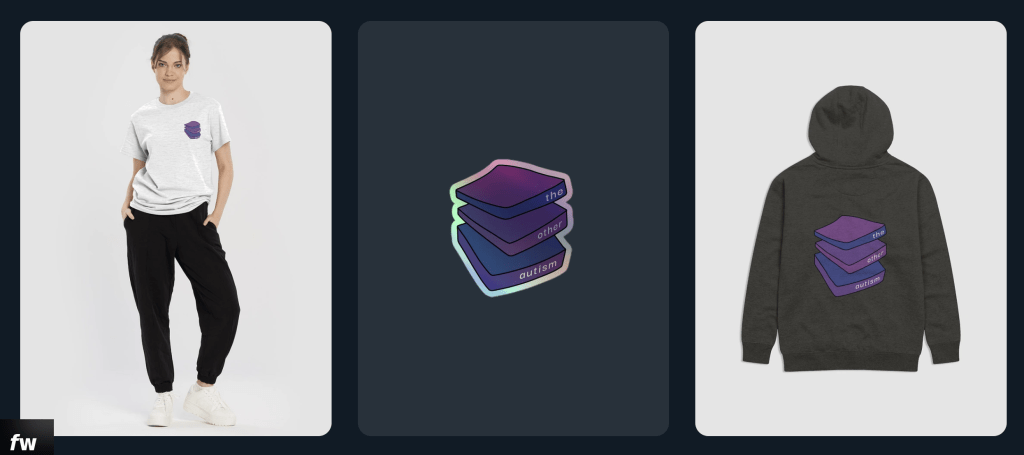
The Other Autism (TOA) official merch is now available. Get your TOA merch!
Use code FREESHIP to get free shipping on orders over $75 USD!
Logo design by Zoe Alexandra Glass, featured in Episode #32!
Watch Rob’s video merch review!
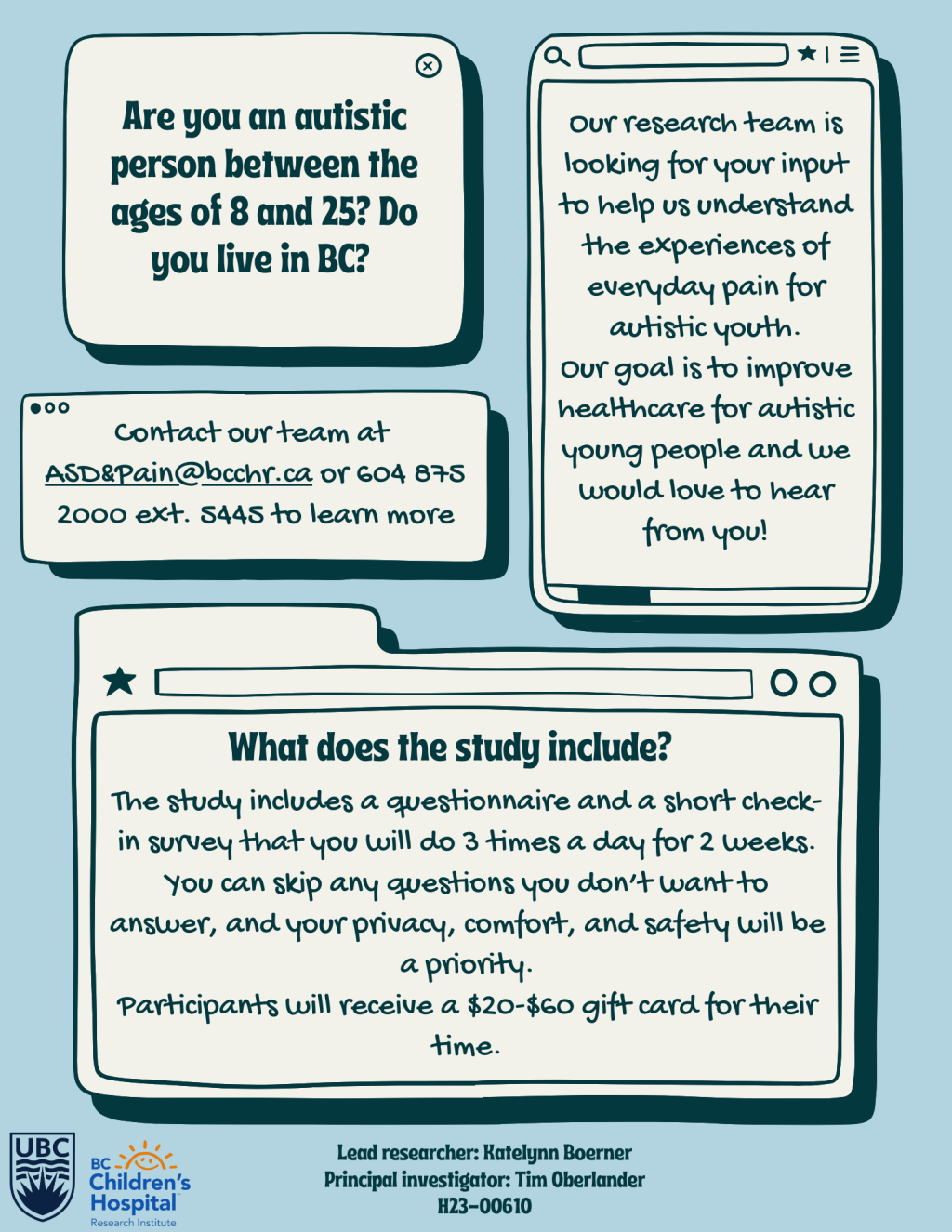
Researchers in British Columbia, Canada are hoping to learn more about experiences of pain in autistic young people. Here’s a message from the team:
Our research team at BC Children’s Hospital and the University of British Columbia is looking to understand the perspectives of autistic children and young people on pain. We are looking for youth who:
to participate in this study. The study contains an online questionnaire and an online check-in survey to be completed 3 times a week, for 2 weeks. Youth can skip any questions in the questionnaire and the survey that they don’t want to answer, and privacy will be protected throughout. In its entirety, participating in this study will take about 5 hours. Youth will receive a $20 gift card for completing the questionnaire, and an additional $20 gift card for each week at least 80% of the check-in questions are completed.
If you or someone you know might be interested in participating, please contact ASD&Pain@bcchr.ca or 604-875-2000 ext. 5445
Small Army Entertainment, in collaboration with a leading Canadian broadcaster, is developing an exciting new series inspired by a global hit. The search is on for autistic individuals (aged 18 or older) in British Columbia to join as interviewers.
Imagine this: You’ll receive training and then step into a studio to interview A-list celebrities, bringing a fresh and unique perspective to the conversation. You’ll have the chance to ask insightful questions and explore the lives of famous personalities in ways that no one else has.
If you’re interested in the possibility of interviewing major celebrities and being part of an incredible team of autistic interviewers, we’d love to hear from you!
Reach out at production@smallarmyentertainment.com
Episode #33 is here: Why I Don’t Do Trigger Warnings on My Podcast
Here’s a deep dive into the controversial topic of trigger warnings. I explore the ongoing debate surrounding the effectiveness and potential dangers of trigger warnings, particularly for those who have experienced complex trauma. I highlight the latest research on trigger warnings, their impact on emotional responses, learning outcomes, and more.
Don’t miss this episode where I challenge the common usage of trigger warnings and explore trigger warnings’ influence on those they’re supposed to protect most.
Watch this episode on YouTube.
If you’d like to know more about topics discussed in this episode, check out:
“Trigger Warning Efficacy: The Impact of Warnings on Affect, Attitudes, and Learning” by Guy Boysen et al.
“A Meta-Analysis of the Efficacy of Trigger Warnings, Content Warnings, and Content Notes” by Victoria Bridgland et al.
“I Was Wrong About Trigger Warnings” by Jill Filipovic
“Helping or Harming? The Effect of Trigger Warnings on Individuals With Trauma Histories” by Payton Jones et al.
“What Does It Mean to Be Triggered?” By Zawn Villines
Kristen Hovet: 1:07
Today I’m doing something a bit different. I’m going to be discussing trigger warnings. While this topic isn’t directly related to autism or autism research, it does come up a lot in content related to autism and neurodiversity. It’s actually almost a given these days that any content that includes discussion of sensitive topics will have trigger warnings. But just because something is pervasive doesn’t make it best practice, nor does it make it safe, specifically psychologically safe in this case.
(more…)British Columbia, Canada
 The Other Autism