The Other Autism (TOA) official merch is now available. Get your TOA merch!
Use code FREESHIP to get free shipping on orders over $75 USD!
Logo design by Zoe Alexandra Glass, featured in Episode #32!
Watch Rob’s video merch review!


The Other Autism (TOA) official merch is now available. Get your TOA merch!
Use code FREESHIP to get free shipping on orders over $75 USD!
Logo design by Zoe Alexandra Glass, featured in Episode #32!
Watch Rob’s video merch review!

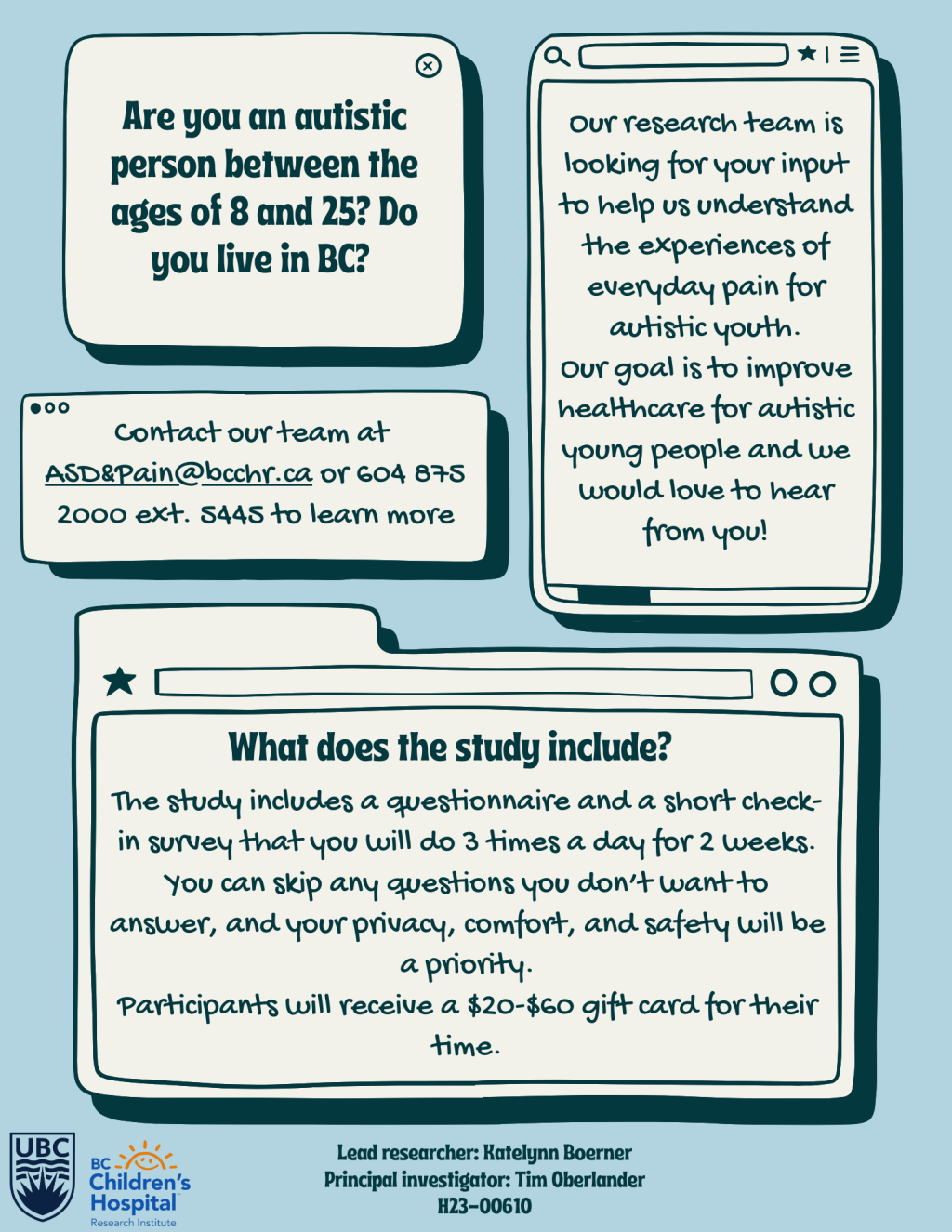
Researchers in British Columbia, Canada are hoping to learn more about experiences of pain in autistic young people. Here’s a message from the team:
Our research team at BC Children’s Hospital and the University of British Columbia is looking to understand the perspectives of autistic children and young people on pain. We are looking for youth who:
to participate in this study. The study contains an online questionnaire and an online check-in survey to be completed 3 times a week, for 2 weeks. Youth can skip any questions in the questionnaire and the survey that they don’t want to answer, and privacy will be protected throughout. In its entirety, participating in this study will take about 5 hours. Youth will receive a $20 gift card for completing the questionnaire, and an additional $20 gift card for each week at least 80% of the check-in questions are completed.
If you or someone you know might be interested in participating, please contact ASD&Pain@bcchr.ca or 604-875-2000 ext. 5445

Episode #38 is here: Autistic Hispanic Personal Trainer in New York
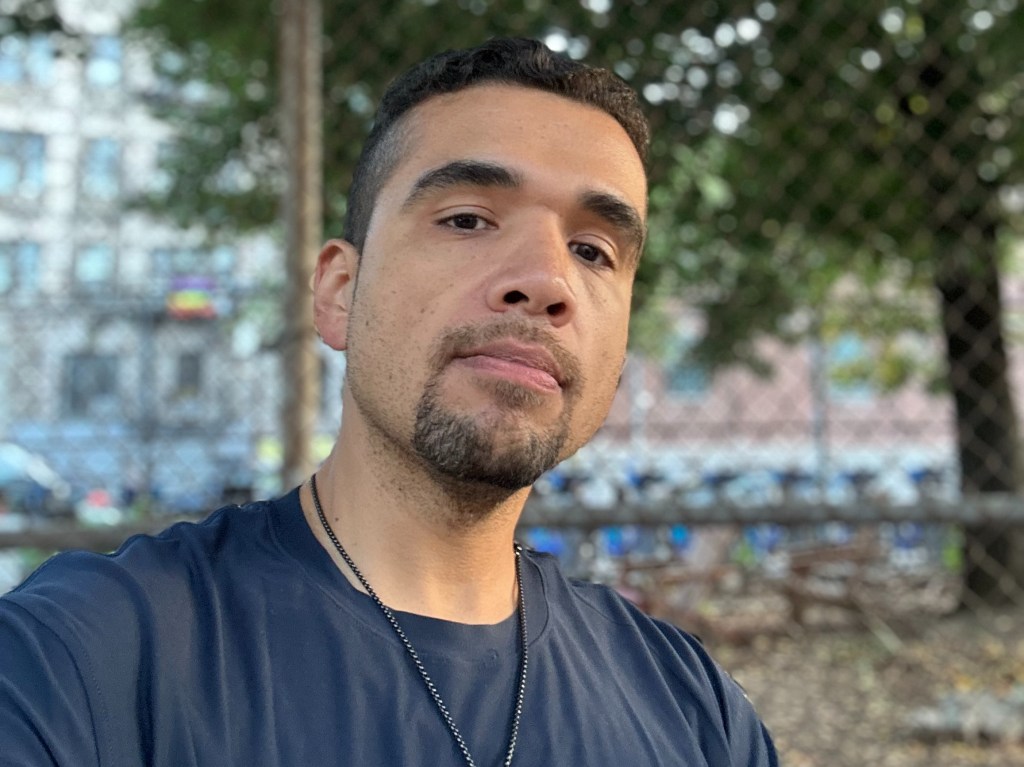
Meet Dennis Bourne, a late-diagnosed autistic and ADHD personal trainer and martial arts instructor. Dennis shares his journey growing up undiagnosed in New York with immigrant parents, recounts his experiences as a Hispanic neurodivergent person, and describes how ADHD and autism diagnoses reshaped his worldview.
Dennis also offers fitness and dietary tips for neurodivergent individuals and emphasizes the importance of adaptable routines. Tune in for insights on self-discovery, embracing neurodiversity, and finding strength in both body and mind.
Watch this episode on YouTube.
Follow Dennis Bourne on Instagram and on YouTube.
Kristen Hovet
Today I’m speaking with Dennis, who is based in New York. Before I share our conversation, just a reminder, if you’re interested in joining the Patreon for The Other Autism, you can head on over to patreon.com/theotherautism. That’s all one word. If you’re listening and watching on YouTube, you’ll notice I changed the background just a little bit. I moved The Other Autism sign. It was kind of bothering me to have it behind me because I would often, my big head would cover part of it and my lights would reflect off the acrylic part of the sign. I’ll leave it for now and see how it goes. And without further ado, please say hello to my guest for today, Dennis.

Episode #37 is here: Former Teacher Finds the Diagnosis Her Therapists Missed
Today, I’m speaking with Sarah, a musician, gardener, and former teacher based in Pennsylvania. Sarah spent much of her life in therapy and struggling with others’ misunderstandings and insensitivities. Now, in her 60s and with a handful of mental health diagnoses behind her, she is finding that autism might explain so many of her experiences.
A series of back-to-back crises set the stage as Sarah wrestles with her newfound autistic identity.
Watch this episode on YouTube.
Kristen Hovet
Today I’m speaking with Sarah, a gardener, musician, and former teacher in Pennsylvania. But before I share our conversation, I’d like to thank Roberta for buying me a coffee through the buy me a coffee link. Roberta, I really appreciate it. I’d also like to thank the Patreon patrons who sponsor the show and in return get some bonus content. There’s also a link in the show notes to Patreon. For a few dollars a month or any custom level that you set, you can become a patron of the show. Speaking of a few dollars a month, I have a correction to make from the last episode. When I was promoting The Other Autism’s Patreon, I said for a few dollars a day, you can support the show. Obviously I meant for a few dollars a month, maybe some wishful thinking on my part. And with that, please say hello to my guest for today, Sarah.

Episode #36 is here: Do Autistic People Lack Empathy?
Many think that autistic people lack empathy, but do they?
Join me as I explore empathy in the context of autism research and the origins of the autistic empathy deficit idea. In this episode, I cover the double empathy problem with help from a friend. How does the double empathy problem explain misunderstandings and communication breakdowns between autistic individuals and neurotypicals?
I also talk about how I personally think of empathy (and how my notions of empathy are surprisingly close to the very first usage of the word!).
Watch this episode on YouTube.
If you’d like to know more about topics discussed in this episode, check out:
“A Reflective Guide on the Meaning of Empathy in Autism Research” by Caroline Bollen
“Autism and Empathy: What Are the Real Links?” By Sue Fletcher-Watson and Geoffrey Bird
“Autism in an Age of Empathy: A Cautionary Critique” by Patrick McDonagh (chapter in Worlds of Autism edited by Joyce Davidson and Michael Orsini)
“On the Ontological Status of Autism: The ‘Double Empathy Problem’” by Damian Milton
“The ‘Double Empathy Problem’: Ten Years On” by Damian Milton et al.
“Object Personification in Autism: This Paper Will Be Very Sad if You Don’t Read it” by Rebekah White and Anna Remington
“A Dual Route Model of Empathy: A Neurobiological Perspective” by Chi-Lin Yu and Tai-Li Chou
Kristen Hovet
Today I’m talking about empathy and the double empathy problem in the context of autism. I’m also going to get into the problem of defining empathy and I’ll discuss how the myth of autistic empathy deficits came about.
British Columbia, Canada