• Home
  • About
  • Merch
  • Reading List
  • Contact

  • Autistic females are very good at hiding their autism

    April 14, 2020
    Adult Autism, Female Autism Phenotype
    Autistic females are very good at hiding their autism

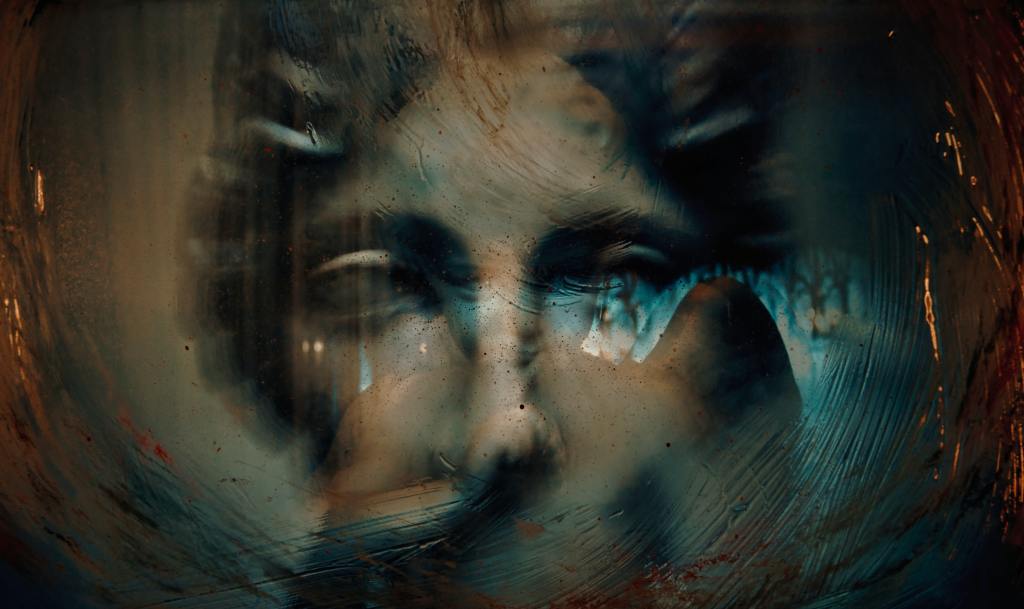
    We call this camouflaging.

    Autistic camouflaging is when the person hides their autistic characteristics or traits so that they are less obvious to others, even though the autistic person is usually not aware that they are doing this.

    “Camouflaging … is a bit like a chameleon changing the patterns on its skin to fit into the surroundings. The chameleon is still there, but it is trying to look like everything else around it.”

    Laura Hull and Will Mandy

    Camouflaging is most common in those with late-diagnosed autism. These individuals are usually not diagnosed until middle age or older adulthood — precisely on account of their ability to mask or camouflage particular behaviours and characteristics.

    In other words, camouflaging often leads to delayed autism diagnosis.

    “Jennifer [who was not diagnosed with autism until she was 45] … says she practices how to act. Before attending a birthday party with her son, for example, she prepares herself to be ‘on’, correcting her posture and habitual fidgeting. She demonstrates for me how she sits up straight and becomes still. Her face takes on a pleasant and engaged expression, one she might adopt during conversation with another parent.”

    Francine Russo

    It’s usually only after diagnosis that an autistic person becomes aware of their camouflaging tendencies, as they may have thought that the things they do to fit in is what everyone does when they socialize. Many will then seek to have more control over their tendency to camouflage, and several try to reduce the behaviour, so as to put less pressure and strain on themselves.

    Camouflaging behaviour is highly correlated with mental health challenges and suicide.

    Many individuals who are diagnosed as autistic in adulthood may not seem all that different to their peers or to people meeting them for the first time, but they feel very different inside. This perceived difference and feeling of otherness causes a great deal of suffering.

    An autistic person’s ability to camouflage usually underlies the common experience of being told, “But you don’t look autistic!” when sharing news of their diagnosis with others.

    Camouflaging for an autistic person takes tremendous energy and is often one of the main reasons that autistic people seem like hermits or “shy” introverts, when in fact not all autistic people are introverted. Contrary to common misconceptions, many (if not most) autistic people enjoy socializing and crave connections with others — just like almost everyone else on the planet — but socializing and interacting with others tends to require more energy for autistic people.

    Most autistic people are unable to tune out or ignore sensory information — like sounds, sights, textures, tastes, smells — the way that neurotypicals (non-autistic people) can. This means that their brains work overtime to sort, process, interpret, and respond to all sensory information and incoming stimuli. The world for an autistic person is typically too loud, too bright, too itchy, too smelly, too uncomfortable, and very, very exhausting. They will need more time to themselves to rest and recharge.

    “When I’m uncomfortable in a social situation because of too much noise and other stimulations, my desire is to escape or retreat quickly (and, as viewed by others, quite rudely) to a safe, quiet corner. But to avoid doing this, I grip my hands tightly together in front of me — really tightly. I crush the fingers of one hand with the other, to the point that it’s painful. Then I can concentrate on the pain and suppress the urge to run away, to be seen as rude.”

    Vanessa Nirode

    Add the need to camouflage to this near-constant state of sensory and cognitive overload, and any energy the autistic person has is quickly used up.

    Camouflaging behaviours include:

    • Making eye contact even when it might be uncomfortable;
    • Forcing oneself to make small talk, even when not interested in this type of conversation;
    • Talking to someone they actually aren’t interested in or may even be afraid of;
    • Putting on a persona or copying behaviours, gestures, facial expressions, and vocal inflections of others so as to “fit in” or not stand out in particular social settings, etc.
      • Some autistic people who are very “skilled” at camouflaging appear to others as incredibly socially skilled, extroverted, and even gregarious; many make great entertainers and several Hollywood stars, comedians, singers, models, and Broadway performers are on the spectrum.

    While everyone, whether autistic or neurotypical, camouflages at times, many autistic individuals camouflage whenever they are in a social setting or around people they do not know well.

    Why do autistic people camouflage?

    • They have grown up being made to feel ashamed of their differences. They learned very early that their unique characteristics and traits are not acceptable or seem strange to most others. To avoid their judgment, disapproval, and/or anger and the resulting embarrassment and shame, autistic people learn to put on an act — to act like neurotypicals.
    • Camouflaging “is often motivated by a sense of alienation and threat, and frequently represents an attempt to avoid ostracism and attacks,” which shows us “the pervasive difficulties of being autistic in a world that is shaped by the non-autistic majority.”

    “Women and girls often have a natural drive to fit in socially, and so the symptoms they present with aren’t stereotypically ‘autistic’.”

    Hannah, interviewed by Lucy Edwards

    While several autistic males and females engage in camouflaging behaviour, evidence shows that it is more common in women, girls, and those assigned female at birth, possibly due to greater social pressures experienced by those who are female or feminine to be socially engaging, vivacious, and always accommodating and pleasing to others.

    “Nearly everyone makes small adjustments to fit in better or conform to social norms, but camouflaging calls for constant and elaborate effort. It can help women with autism maintain their relationships and careers, but those gains often come at a heavy cost, including physical exhaustion and extreme anxiety.”

    Francine Russo

    Never miss a post. Subscribe to receive an email update every time a new post is published:

    • Bluesky
    • Instagram
    • YouTube
    • LinkedIn
    • Facebook
    • Link
  • Common misdiagnoses given to undiagnosed autistic women

    April 7, 2020
    Autism Diagnosis, Female Autism Phenotype
    Common misdiagnoses given to undiagnosed autistic women

    “There is increasing evidence that … autism symptoms in women and girls are frequently overlooked and misdiagnosed.”

    Robert T. Muller

    Autistic females and some males who have not yet received an autism diagnosis often go through life with only partial explanations for their difficulties and differences. These explanations usually come in the form of psychiatric and mental health misdiagnoses, incorrect, or partial diagnoses.

    Common misdiagnoses and partial diagnoses given to undiagnosed autistic individuals include:

    • Borderline personality disorder (BPD)
    • Schizophrenia
    • Post-traumatic stress disorder (PTSD)
    • Bipolar disorder
    • Obsessive-compulsive disorder (OCD)
    • Depression
    • Social anxiety disorder
    • Generalized anxiety disorder
    • Anorexia and/or other eating disorders
    • Phobias

    It should be noted that just as these conditions can co-occur in various combinations in those who are not autistic (aka neurotypical), autistic individuals can also have one or more of the above conditions. The majority of autistic individuals, for example, are diagnosed with anxiety and/or depression and/or PTSD at some point in their lives, either as a direct result of autism or from living in a world that is discriminatory to autistic people and autistic traits.

    Many individuals on the spectrum have significant and numerous experiences of being bullied, rejected, sexually abused, and otherwise mistreated and victimized. There is significant evidence showing that those on the spectrum are more naive, trusting, and desperate for acceptance from peers — and therefore more likely to get into abusive relationships (due to not noticing or responding to red flags sooner) and other scenarios that put them at risk.

    So why should we be concerned?

    “I’ve been through quite a long journey, being given about 10 mental health diagnoses along the way. It was getting to that point where it felt like I was caught in the middle of a guessing game. … ‘We don’t really understand — let’s keep throwing labels and see what sticks.’”

    Emily Swiatek

    When an undiagnosed autistic adult is diagnosed with any of the above conditions or other mental health conditions, it’s only part of the picture.

    An undiagnosed autistic individual who receives misdiagnoses or partial diagnoses can experience significant problems with stigma and discrimination (especially in the case of schizophrenia and borderline personality disorder), and even discrimination from healthcare professionals who specialize in treatment of these conditions.

    They can also receive years of unnecessary psychotropic medications and various forms of talk therapy with little to no positive impact on their lives (often due to the therapist or psychologist not understanding autism and therefore not able to address the main presenting concerns). This can lead to significant frustration, hopelessness, and a tendency to self-blame.

    Most importantly, undiagnosed autistic adults who have received wrong or partial mental health diagnoses lack the knowledge that will set them on the path to self-acceptance.

    For autistic individuals of any age, sex, gender, and ethnicity, self-understanding and self-acceptance are key to contentment and thriving in life.


    Never miss a post. Subscribe to receive an email update every time a new post is published:

    • Bluesky
    • Instagram
    • YouTube
    • LinkedIn
    • Facebook
    • Link
  • The deficit model of autism

    April 7, 2020
    Deficit Model of Autism, History of Autism Knowledge
    The deficit model of autism

    Autism research and our shared knowledge about autism have come a long way. However, while great advances have been made, there is still a long way to go. The actual way we think about autism needs a drastic overhaul.

    Autism was once categorized as a mental illness that had its roots in early childhood trauma or poor parenting. We now know that it is a genetic neurodevelopmental difference. Most knowledgeable autism experts and researchers are steering away from using words like “disorder” or “illness” to describe autism. They also tend to use words like “traits” or “characteristics” instead of “symptoms” or “signs” of autism.

    Historically, though, our understanding of autism has been based on a deficit model. The deficit model continues to be the prevailing one. In other words, most of our understanding of autism is rooted in the negative aspects of the condition, the apparent difficulties, problems, and symptoms that come along with being autistic.

    This deficit model is based on a non-autistic (aka, neurotypical) understanding of what it looks like on the surface to be autistic. And, more importantly, this deficit model of autism is based on a neurotypical concept of what is normal and acceptable in the areas of communication, behaviour, social interaction, and responses to sensory input.

    Diagnosis of autism is made based on two main categories of outward observations (pay attention to all the negative words, like “deficiency” and “lack” and “restricted”):

    • Deficits in social communication, manifested by:
      • Deficiency in back-and-forth conversation,
      • Less social interaction and absence of interest in peers,
      • Abnormal eye contact (too little or too much),
      • Strange gestures, and/or
      • Deficits in developing and/or maintaining friendships and other relationships.
    • Behaviours or interests that are repetitive or restricted, manifested by:
      • Repetitive movements or repetitive speech (e.g., saying the same word or phrase over and over, humming the same tune repeatedly),
      • Having inflexible routines or distress in response to change,
      • Restricted interests that are abnormal in intensity or focus, and/or
      • Hyper- or hypo-reactivity to sensory input (i.e., either indifferent to sensory input like pain or temperature or overly responsive to sensory input like bright light and noisy environments).

    As an autistic person, I can tell you that I do not experience the way I communicate socially as a deficit or lack. Other people have made me feel ashamed for my quirks and social differences (many of which I mask — more on that later!), yes, but in a roomful of only autistic people my way of being is not odd or wrong at all. The neurotypicals are the ones who would appear quirky or odd in a roomful of autistic people.

    My way of being and communicating socially is odd, problematic, or deficient only from a neurotypical standpoint.

    For example, my own back-and-forth conversation might appear “deficient” or “impaired” because I usually display more and longer pauses in conversation than neurotypicals are used to. This is due to the fact that my brain takes more in — cognitively and sensorily — than a neurotypical brain, meaning that my brain has to work harder to sort, filter, and analyze the incoming information. What looks like gaps and oddness to you is just me processing and formulating a response.

    Also, I usually won’t say anything unless saying something has a clear purpose at that moment (to share important information, ask an important question, make someone laugh [definitely important!], etc.). From a neurotypical perspective, this might look like something is wrong with me. I’m “too shy” or “stupid” or “aloof” or any number of negative assessments.

    There are other autistic people who, in the same scenario, might talk “too much” and for various reasons. It could be an anxious or fight-or-flight type response to the flood of cognitive and sensory information coming in. This FLOOD of information can be literally agonizing, especially if we are stressed or already overwhelmed in some way. For some of us, talking or vocalizing in any way can be soothing.

    Another example in response to the diagnostic criteria above: I have less social interaction compared to the average neurotypical, yes, mostly because social interaction — especially in large groups or in new (or loud!) settings — is very draining for me. I need a lot more time to recharge and be alone.

    But my experience of the level of my social interaction is that it is just right. In other words, I don’t feel that I require more social interaction, and I am actually deeply interested in my peers. It’s why many of us are interested in psychology and often pursue psychology as a special interest or career choice (more on that later!).

    I may not look you in the eye as much as you’re used to, because for whatever reason direct eye contact FEELS very intense and can even be painful sometimes. I can hold your gaze and I can do it well, but it’s because I have been taught that this is what is expected of me in social contexts. But the neurotypical demand for and expectation of near-constant eye contact feels abnormal and strange to me!

    From an autistic perspective, the neurotypical world is the deficient one, the odd one, the one that is pathological and makes very little sense. It’s too noisy, too rigid, too set on conformity, too bright, glaring, and disconnected.

    It is easy for me to turn the DSM-5’s diagnostic criteria into a list of benefits, strengths, gifts, and unique qualities:

    • Strengths in social communication, manifested by:
      • Deep conversation as opposed to small talk,
      • More meaningful but fewer social interactions,
      • Purposeful eye contact only when necessary,
      • Unique gestures that help relieve tension and stress,
      • Intense social interactions and strong bonds with a select few, and/or
      • Deep interest in others that often takes the form of involvement in social issues, psychology, sociology, and so on.
    • Ability to maintain strong focus and feel very deeply, manifested by:
      • Being able to study or focus on one subject or issue for long periods of time,
      • An adaptive ability to keep strict schedules, allowing for a sense of calm and control in a busy world filled with pressures and expectations, and/or
      • Being intensely connected to everything around them so that everything is more overwhelming, but also more beautiful (Note: some autistic folks experience some sensory stimuli less intensely, but they almost always have some kind of hyper-reactivity to some kinds of stimuli; they may not be sensitive at all to cold, for example, but they will be unable to socialize in a crowded room).

    Never miss a post. Subscribe to receive an email update every time a new post is published:

    • Bluesky
    • Instagram
    • YouTube
    • LinkedIn
    • Facebook
    • Link
  • Facts about undiagnosed autism (infographic)

    April 4, 2020
    Adult Autism, Female Autism Phenotype

    Here’s the problem: the number of children diagnosed with autism today is far greater than the number of adults diagnosed with autism. The two numbers should match. This means, there are a lot of adults in need of diagnosis.

    Sources:

    Baio, J., Wiggins, L., Christensen, D. L., Maenner, M. J., Daniels, J., Warren, Z., Kurzius-Spencer, M., Zahorodny, W., Robinson-Rosenberg, C., White, T., Durkin, M. S., Imm, P., Nikolaou, L., Yeargin-Allsopp, M., Lee, L. C., Harrington, R., Lopez, M., Fitzgerald, R. T., Hewitt, A., … & Dowling, N. F. (2018). Prevalence of Autism Spectrum Disorder among children aged 8 years. Surveillance Summaries, 67(6), 1-23. http://dx.doi.org/10.15585/mmwr.ss6706a1

    Bargiela, S., Steward, R., & Mandy, W. (2016). The experiences of late-diagnosed women with autism spectrum conditions: An investigation of the female autism phenotype. Journal of Autism and Developmental Disorders, 46(10). doi:10.1007/s10803-016-2872-8

    Cusack, J., Shaw, S., Spiers, J., & Sterry, R. (2016). Personal tragedies, public crisis: The urgent need for a national response to early death in autism. Autistica website. https://www.autistica.org.uk/downloads/files/Personal-tragedies-public-crisis-ONLINE.pdf


    Never miss a post. Subscribe to receive an email update every time a new post is published:

    • Bluesky
    • Instagram
    • YouTube
    • LinkedIn
    • Facebook
    • Link
  • What is the Female Autism Phenotype?

    February 15, 2020
    Autism Diagnosis, Female Autism Phenotype
    What is the Female Autism Phenotype?

    Some females are diagnosed as autistic at a young age, but the majority go undiagnosed until their teenage or adult years. A large number are never diagnosed. Why is this the case?

    The girls that get diagnosed as autistic at a young age often present with more male-like or “traditional” autistic characteristics. One might say that they present with more “obvious” autistic traits. While the girls who get diagnosed early in life are NOT “more autistic”, their characteristics DO happen to be more in line with the stereotypical, incomplete account of autism, on which the DSM criteria are based.

    Both the earliest research in autism and the majority of research in autism have been done in men and boys. This has led several autism experts to conclude that significant revisions to the diagnostic criteria and assessment tools are required to ensure reliable autism diagnosis in all genders.

    The other reason that girls might be diagnosed early is that they had the good fortune of receiving an autism assessment by a healthcare professional who was well-versed in the many faces of autism (aka, autism’s heterogeneity) and highly knowledgeable about the ways that autism can present very differently in females.

    Here are some ways that autism presents differently in females:

    Autistic females are generally more socially-inclined and socially-capable than their male peers. While their social lives will usually be different than those of non-autistic females — generally having fewer friendships and spending more time alone — they are less likely to be seen as different or abnormal.

    Autistic females are better able to unconsciously “camouflage” or “mask” their autistic characteristics and difficulties in such a way that they generally fit in and do not seem different from their peers. There are incredibly high emotional and physical impacts of camouflaging, which can result in significant risk of developing mental health disorders and autoimmune disease. High risk of suicide is correlated with camouflaging behaviours.

    Autistic women and girls tend to have fewer repetitive behaviours (such as hand-flapping and rocking back and forth), or are more inclined to hide these behaviours from others.

    The special interests of autistic women and girls tend to be more varied and seen as more socially-acceptable than those of autistic men and boys (though there are clear exceptions). Autistic women and girls are more likely to have special interests in makeup, celebrity culture, crafts, literature, poetry, music, and fine art.

    Undiagnosed autistic girls who present with behavioural or emotional problems are likely to have these problems blamed on “feeling blue”, shyness, being highly sensitive, family problems, trauma, or other issues, while undiagnosed autistic female teens and women are more likely to be diagnosed with depression, PTSD, obsessive-compulsive disorder, anxiety, bipolar disorder, or borderline personality disorder. Usually the last option, or the option that no one thinks of, is AUTISM.


    Never miss a post. Subscribe to receive an email update every time a new post is published:

    • Bluesky
    • Instagram
    • YouTube
    • LinkedIn
    • Facebook
    • Link
Previous Page
1 … 8 9 10

British Columbia, Canada

  • Bluesky
  • Instagram
  • YouTube
  • LinkedIn
  • Facebook
  • Link

otherautism@gmail.com

Privacy & Cookies: This site uses cookies. By continuing to use this website, you agree to their use.
To find out more, including how to control cookies, see here: Cookie Policy
 

Loading Comments...
 

    • Subscribe Subscribed
      • The Other Autism
      • Join 674 other subscribers
      • Already have a WordPress.com account? Log in now.
      • The Other Autism
      • Subscribe Subscribed
      • Sign up
      • Log in
      • Report this content
      • View site in Reader
      • Manage subscriptions
      • Collapse this bar